
Streamlining Workflow: Tools & Tips Every Medical Scribe Should Know
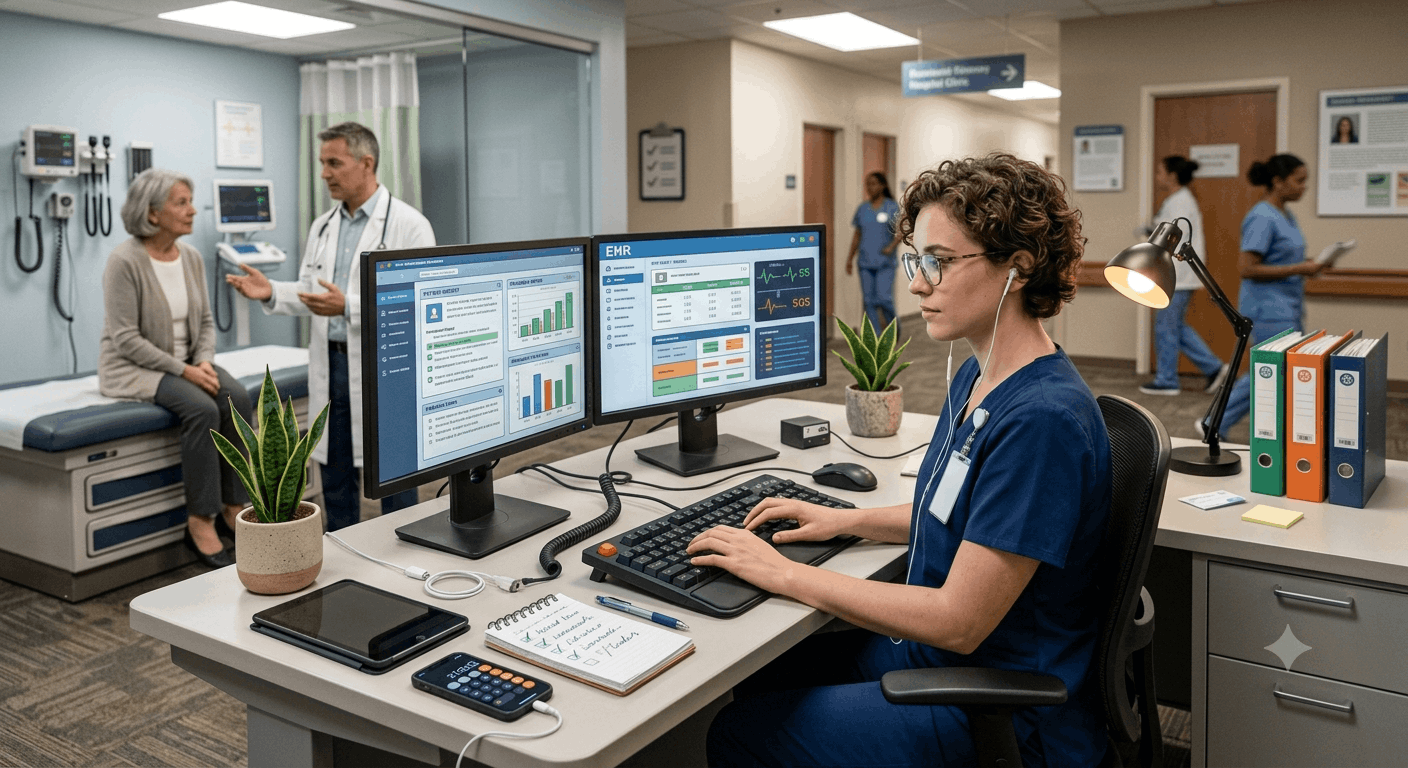
Medical scribes play an important role in helping physicians manage clinical documentation. During busy shifts, scribes must capture patient information accurately while keeping pace with conversations, examinations, orders, and treatment decisions.
A well-organized workflow can make this process more efficient. The right tools, documentation habits, and communication practices can help medical scribes reduce delays and support physicians without compromising documentation quality.
Why an Efficient Medical Scribe Workflow Matters
Medical scribing requires more than typing quickly. Scribes need to understand clinical conversations, recognize important details, organize information, and enter documentation into the electronic health record (EHR).
An inefficient workflow can lead to missed information, documentation delays, and unnecessary back-and-forth with providers. A streamlined workflow helps scribes:
-
Capture information in real time
-
Keep documentation organized
-
Reduce repetitive tasks
-
Support faster chart completion
-
Communicate more effectively with physicians
-
Maintain consistent documentation quality
1. Become Comfortable With the EHR
The EHR is one of the most important tools in a medical scribe's workflow. Scribes should understand the system's navigation, templates, shortcuts, order-entry processes, and documentation sections.
Learning commonly used functions can save significant time during busy clinical shifts. Keyboard shortcuts, saved templates, smart phrases, and commonly used fields can reduce repetitive work.
However, efficiency should never come at the expense of accuracy. Scribes should always verify patient information and documentation before moving to the next encounter.
2. Use Templates and Smart Phrases
Templates can help medical scribes maintain consistency across similar encounters. For example, a specialty may frequently require documentation of specific symptoms, examination findings, or medical history.
Smart phrases and standardized templates can make frequently documented information easier to enter. They can also provide a useful structure for organizing clinical notes.
Scribes should use templates as a starting point rather than relying on them blindly. Information must be customized to reflect the patient's actual encounter.
3. Keep a Consistent Note-Taking System
Real-time documentation can become challenging when several pieces of information are discussed at once. A consistent note-taking system helps scribes organize information before entering or finalizing it in the EHR.
A scribe can mentally organize information around areas such as:
Chief complaint → History → Examination → Assessment → Plan
This structure makes it easier to identify missing information and follow the physician's clinical reasoning.
4. Learn Common Medical Terminology
Strong knowledge of medical terminology helps scribes understand conversations more quickly. Familiarity with abbreviations, medications, procedures, anatomy, and common diagnoses can reduce confusion during fast-paced encounters.
Medical scribes should continue building their vocabulary through regular learning and exposure to different specialties.
For example, an emergency department scribe may encounter trauma terminology and emergency procedures regularly, while a cardiology scribe may frequently document cardiac symptoms, testing, and diagnoses.
5. Use Secure Communication Tools
Communication between scribes and physicians is essential for an efficient workflow. Secure messaging platforms and approved communication systems can help teams clarify missing information without disrupting patient care.
Any communication tool used for clinical information should follow the organization's privacy and security requirements. Medical scribes should avoid using personal messaging applications or unauthorized platforms for protected health information.
6. Develop Strong Listening Skills
Typing speed is useful, but listening skills are just as important.
Scribes need to distinguish clinically relevant information from casual conversation. They should listen carefully for symptoms, duration, medications, allergies, examination findings, diagnostic decisions, and treatment plans.
Active listening also helps scribes anticipate what information may need to be documented next.
7. Prioritize Accuracy Over Speed
A fast workflow is valuable only when documentation remains accurate.
Scribes should avoid guessing unclear terminology or filling gaps with assumptions. When information is unclear, the appropriate approach is to follow the organization's process for clarification.
Before completing a note, scribes should check important details such as patient identifiers, medications, diagnoses, examination findings, and the physician's plan.
8. Create a Workflow for Busy Shifts
Medical scribes may work in environments where several patients require attention simultaneously. Having a consistent workflow can help reduce mental overload.
A practical process may include:
Before the shift: Review schedules, assignments, and specialty-specific requirements.
During the encounter: Capture relevant information in real time and follow the physician's workflow.
After the encounter: Review the note for completeness and accuracy.
Before finalization: Confirm that required sections and physician instructions have been addressed.
This routine can help scribes stay organized even when patient volume increases.
9. Use Time Between Encounters Wisely
Small gaps between patient encounters can provide an opportunity to review notes, complete unfinished documentation, and prepare for the next patient.
Instead of allowing unfinished charts to accumulate, scribes can use these periods to keep documentation current. This can help prevent a large backlog toward the end of a shift.
10. Understand Specialty-Specific Workflows
Every specialty has different documentation requirements. A workflow that works well in primary care may not work equally well in emergency medicine, cardiology, nephrology, or other specialties.
Medical scribes should learn the common workflows and terminology associated with their assigned specialty. This knowledge allows them to anticipate documentation needs and work more efficiently with physicians.
11. Take Advantage of Training and Feedback
Continuous feedback can improve both speed and documentation quality. Scribes should pay attention to physician preferences and recurring corrections.
If a physician consistently requests changes to a particular section of a note, the scribe can adjust their workflow accordingly.
Regular training can also help scribes stay familiar with EHR updates, organizational policies, documentation standards, and new technologies.
12. Protect Patient Information
Workflow efficiency must always operate within privacy and security requirements. Medical scribes handle sensitive patient information and should follow applicable organizational policies, including HIPAA requirements where applicable.
This includes using authorized systems, protecting login credentials, avoiding unnecessary access to patient records, and following proper procedures for handling clinical information.
Building a Better Medical Scribe Workflow
The most effective medical scribe workflow combines technology with strong documentation skills. EHR shortcuts, templates, secure communication tools, and structured workflows can reduce unnecessary work, but they cannot replace careful listening and clinical understanding.
Medical scribes should focus on creating repeatable habits. Preparing before a shift, documenting consistently, reviewing notes promptly, and communicating clearly with physicians can make everyday workflows more manageable.
For healthcare organizations, a structured scribe program can also provide physicians with consistent documentation support. By combining trained medical scribes with appropriate technology and clearly defined workflows, practices can improve documentation efficiency while allowing physicians to spend more attention on patient care.

 English
 Arabic
 French
 Spanish
 Portuguese
 Deutsch
 Turkish
 Dutch
 Italiano
 Romaian
 Portuguese (Brazil)
 Greek