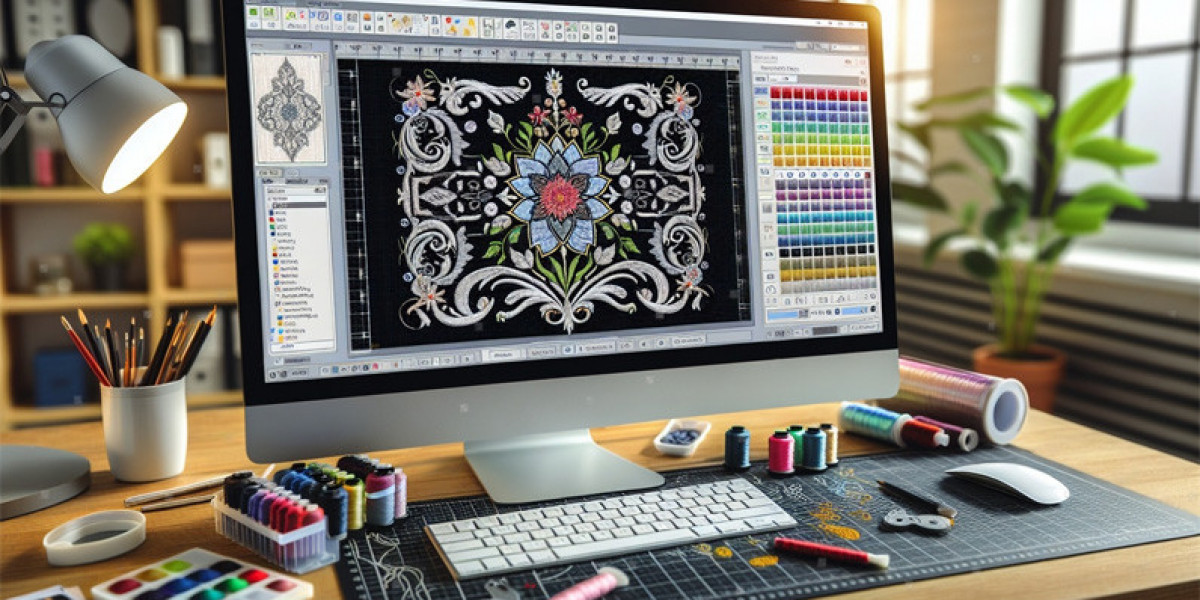
Introduction
You have seen those beautiful lace ornaments, delicate earrings, and intricate bookmarks that look like they came from a fancy boutique. Then you realize someone stitched them on a regular embroidery machine. No fabric. Just thread. That magic is called freestanding lace, and it all starts with expert file preparation. If you try to stitch a normal design on water-soluble stabilizer, it will fall apart the moment you wash it. FSL digitizing follows completely different rules, and professional Custom FSL Embroidery Digitizing ensures your lace pieces stay strong and beautiful after every wash.
This guide explains what FSL is, how it differs from regular embroidery, the software and techniques professionals use, and why expert digitizing makes all the difference for delicate lace projects.
What Is Freestanding Lace Embroidery
Freestanding Lace embroidery is a special type of machine embroidery that you stitch only on water-soluble stabilizer instead of fabric . After you finish stitching, you rinse the stabilizer in water and it melts away. What remains is a beautiful lace shape that can stand on its own without any fabric behind it .
People use FSL to make ornaments, earrings, bookmarks, Christmas decorations, small gifts, lace patches, and even elegant neckline inserts for dresses . The design possibilities are endless, but the digitizing requirements are very specific.
Unlike normal embroidery where the fabric provides the strength, FSL has no fabric at all. The thread itself must create the entire structure . This makes FSL far more sensitive to density, underlay, and stitch direction.
FSL vs Regular Embroidery: What Is the Difference
Let me break down the key differences so you understand why FSL digitizing requires a completely different approach.
Support system is the biggest difference. In normal embroidery, the fabric provides the strength and keeps the stitches secure. FSL has no fabric, so the thread itself must create the entire structure .
Stitch types used also differ. FSL relies more on fill stitches to build a solid base and uses fewer satin stitches. Satin is often too loose or too narrow to support itself. FSL also avoids open gaps that would leave the lace weak or unstable .
Stitch density is much higher in FSL. A digitizer's goal with non-lace embroidery designs is to create a beautiful piece with as few stitches as possible. When digitizing for lace, the stitch count is incredibly higher . If you see spaces between your stitches, that is a tell-tale sign that your lace will not hold up when the stabilizer is removed.
Impact of mistakes is also different. In regular embroidery, small errors like loose gaps or light density usually do not cause major problems. In FSL, those same mistakes can destroy the whole piece. When you wash away the water-soluble stabilizer, any weak area can tear immediately .
The Core Principles of Professional FSL Digitizing
Professional FSL digitizers follow several key principles to ensure their designs stay strong after washing.
Build a Strong Foundation Layer
Every FSL design needs a dense fill layer to build the base of your lace. This minimum density keeps the design strong after the stabilizer dissolves. Add a random or lattice underlay to lock the stitches together and prevent the lace from tearing .
Use Multiple Layers with Different Stitch Orientations
A common technique involves creating three layers with different stitch directions. Duplicate your shape, then create stitches for each layer at different angles. This crisscrossing pattern gives the lace strength in multiple directions. When the stitches lock together from different angles, they cannot pull apart easily .
Include Connection Points
Connectors hold the lace together during washing. You need to include small linking bridges throughout the design. Place them in areas where they blend naturally into the pattern. Keep each connector thick enough to stay strong but thin enough to stay hidden .
Set the Correct Density
Aim for a density between 0.35 and 0.45 millimeters depending on your software. FSL needs higher density than normal embroidery because it has no fabric. If the density is too high, the design forms knots. If it is too low, the lace breaks apart .
Add a Satin Border When Needed
Use satin stitches if you want clean, smooth edges. But keep the satin narrow because thick satin can curl or become too heavy for lace. Only add satin where it supports the design without weighing it down .
Adjust Pull Compensation
FSL pulls more than regular embroidery because it has no fabric to stabilize it. Add a safe pull compensation value so your shapes stay accurate. Always run a test stitch to see how your machine handles tension and pull .
Software Options for Creating FSL Files
To create clean and stable FSL designs, you need software that gives you control over density, underlay, and stitch angles .
Wilcom Embroidery Studio is one of the most powerful digitizing programs. It offers excellent control for FSL structure, connectors, and fills. This is what professional digitizers use .
Hatch Embroidery is a lighter, more affordable version of Wilcom that still provides the features needed for FSL digitizing. Great for serious home users and small shops .
Embird Studio NEXT includes specific tools for FSL creation, including the Mesh tool for creating loose fills and the Overlock mode for satin borders . The Mesh tool can create a wide range of fills, but for FSL, you want fills that form an intertwined net or grid .
Bernina Embroidery Software 9 also supports FSL digitizing with built-in lacework tools .
Ink/Stitch is a free and open-source tool. It works for basic FSL, but it has limitations in density control, underlay options, and advanced editing .
Common Mistakes That Ruin FSL Designs
Let me save you from the errors that destroy freestanding lace.
Using too much satin stitch is a classic mistake. Satin stitches look clean, but using them everywhere makes the lace collapse. Satin is not strong enough to hold the structure once the stabilizer dissolves .
Leaving large gaps weakens the lace. Big empty spaces create weak points. When the stabilizer melts, these open areas can tear or cause the entire piece to lose its shape .
Skipping the foundation fill is a guaranteed failure. Without a solid base layer, the lace has nothing to support it. Always include a strong foundation fill before adding decorative details .
Using cotton thread leads to breakage. Cotton thread is soft and weak. Use polyester instead because it is stronger, shinier, and can handle dense stitching without breaking .
Incorrect density ruins everything. Density that is too low makes the lace fragile. Density that is too high creates knots and tension issues. FSL needs balanced, slightly heavier density for proper strength .
Materials You Need for Stitching FSL
Let me tell you what supplies work best for freestanding lace.
Thread: Use 40 weight polyester thread. Polyester is strong, shiny, and durable. It handles dense stitching much better than cotton .
Needle: Use size 75/11 or 80/12. These sizes handle tight fill stitches without shredding the thread .
Stabilizer: Use water-soluble stabilizer, the fabric-type that feels like a thin cloth rather than clear film. The fabric-type offers strong support during stitching and helps the lace keep its shape. For most FSL projects, hoop two layers of water-soluble stabilizer .
Bobbin thread: Use the same thread on the bobbin as on top. For lace, matching bobbin thread matters more than in regular embroidery because both sides of the lace are visible .
Speed: Run your machine at 500 to 600 stitches per minute. The stabilizer is not as strong as fabric, so slower speeds prevent tearing .
Why Outsourcing FSL Digitizing Makes Sense
Professional digitizing services bring specialized expertise to FSL projects. They understand the unique rules of lace digitizing: higher density, strategic connection points, minimal satin stitching, and proper underlay .
When you work with a professional service, you avoid costly trial and error. They know exactly how to set density, pull compensation, and underlay for your specific design and machine. They create files that run cleanly without thread breaks or distortion.
Many businesses prefer outsourcing FSL digitizing because it saves time and ensures consistent quality. Professional digitizers have the software, experience, and testing capabilities to deliver production-ready files that stitch flawlessly every time.
Conclusion
Custom FSL embroidery digitizing represents a completely different approach than standard embroidery files. Freestanding lace has no fabric backing, so every stitch must work together to create a self-supporting structure. Higher density, stronger underlay, strategic connection points, and minimal satin stitching are the keys to success.
Use polyester thread, a 75/11 or 80/12 needle, and fabric-type water-soluble stabilizer. Run your machine at moderate speeds. Always test your design before committing to a final project.
Whether you digitize your own FSL files using professional software or you outsource to an expert service, the result is the same. Beautiful, delicate lace that stands on its own and impresses everyone who sees it.